
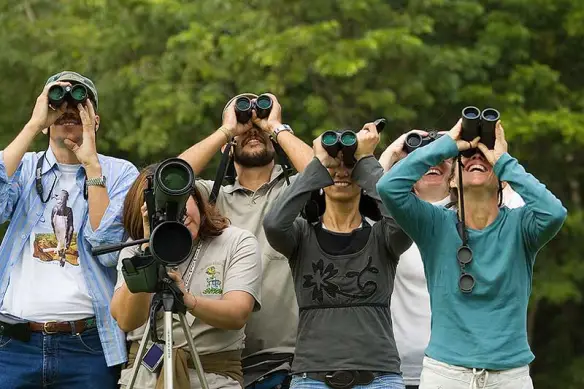
Birdwatching is experiencing a boom these days. Every day, we want to reconnect more intensely with nature. The reasons for taking up this rewarding hobby can vary greatly. These include: learning to identify the birds we see or hear, compiling lists of different species, photographing them and collecting photos, or simply enjoying their beauty. Whatever your approach, feel welcome and join us in the same spirit as everyone else: getting out and enjoying nature and all its expressions.
When we first become interested in this world, the same question always arises: how to get started with birdwatching? It’s not just any question, as the sheer variety of species and perceptions (songs, sightings in flight, perching, etc.) can overwhelm anyone and lead to discouragement or even giving up. If I had to choose one thing from everything I’m going to suggest here, I would say: get out into the countryside and practice direct observation and listening.
Where to begin?
Obviously, the most basic and important thing is to get out into the field. But once I’m out there and the colors, shapes, and sounds start swirling around me, how do I continue? Let’s start by choosing a field guide.
Binoculars

Bird´s guide
Movil App
Binoculars:
Birds are wonderful and fascinating creatures, and the great thing about them is that they can be found everywhere, even from your window in a big city. The downside is that they’re usually at a distance, and ideally, you’d be able to observe them from closer up, or better, with binoculars. And now comes the big question:
-
-
- Which binoculars are ideal?
- How much should I spend to get started?
- Where can I buy binoculars for birdwatching?
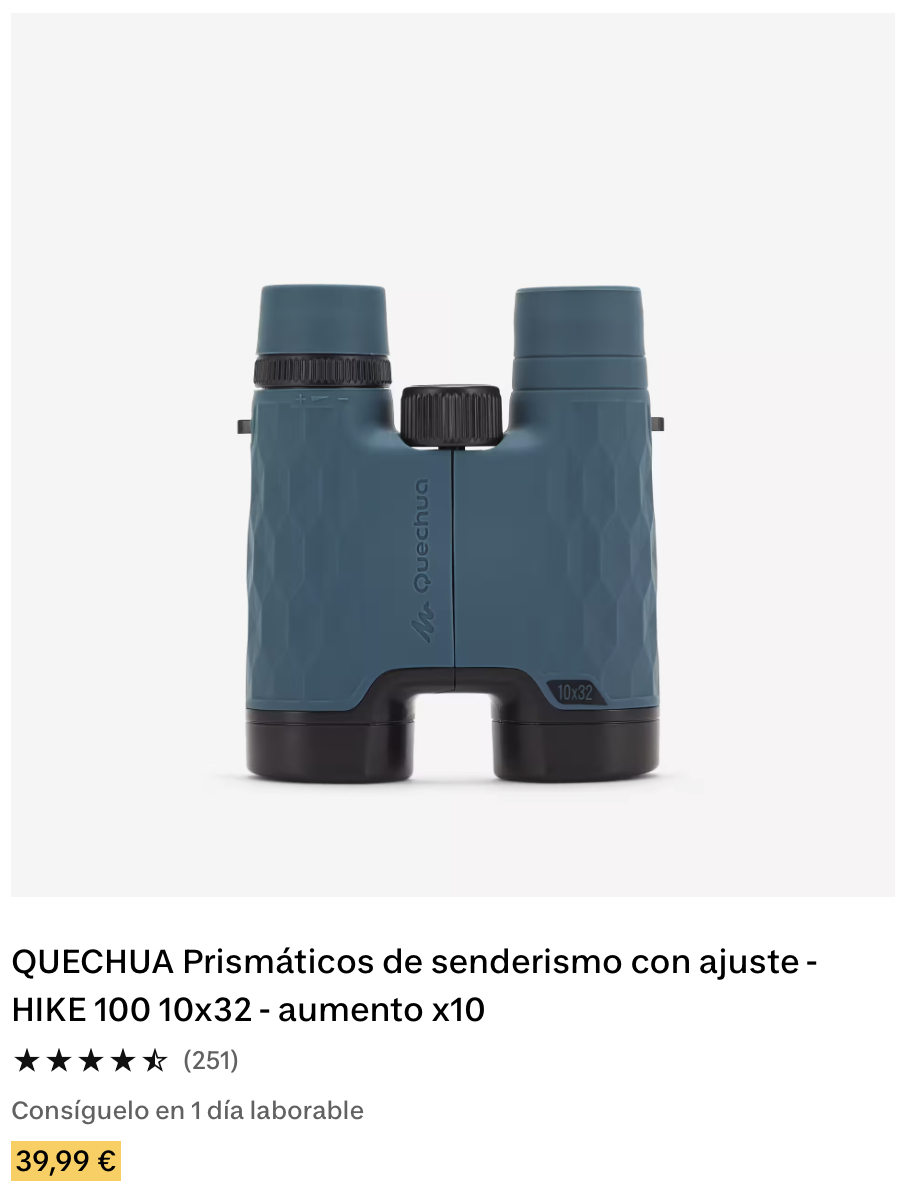
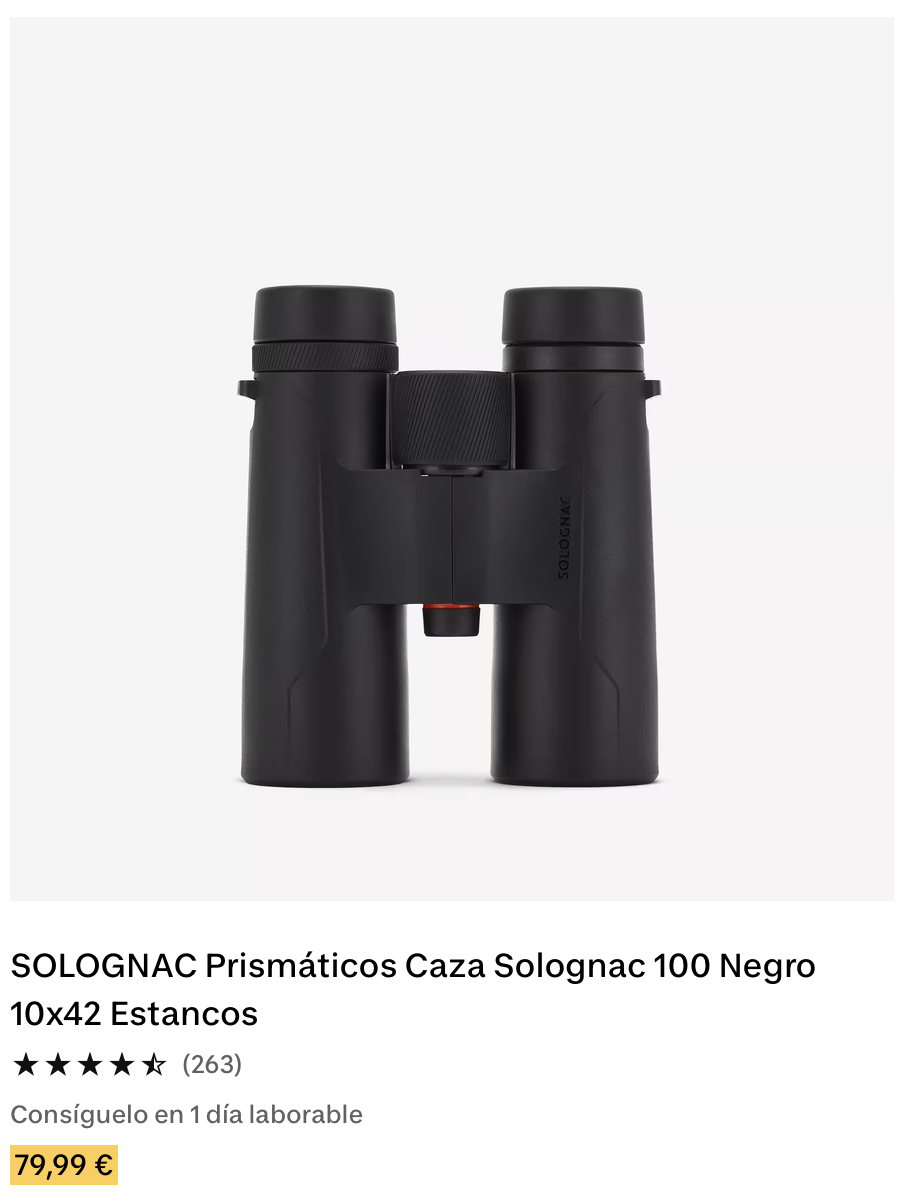
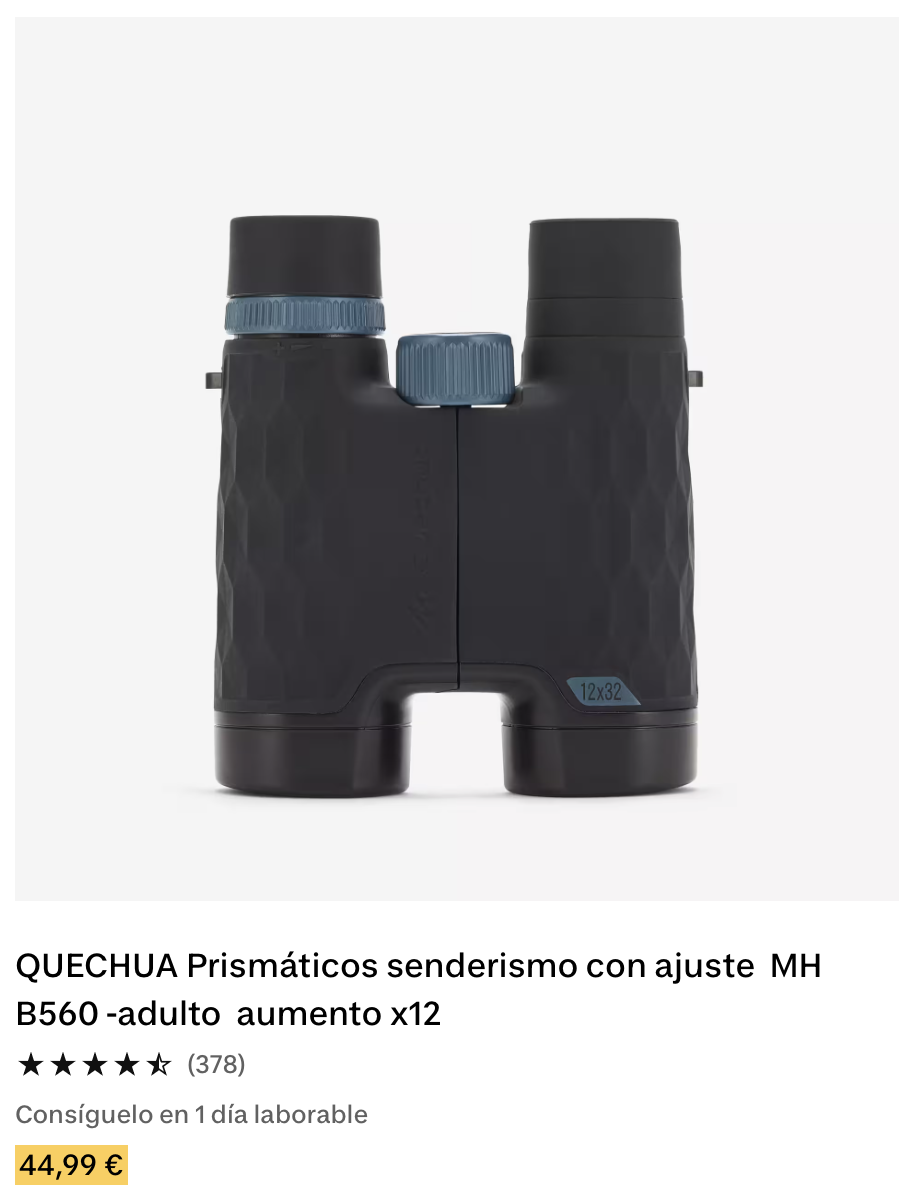
- I have good news for you: you can start with binoculars for around €50. And you’ll easily find them at Decathlon.
-
How do I know they’re right for me? What features should they have? How do I choose the model? Well, binoculars are defined by two numbers, for example: 8×32. The first number indicates the magnification. In this case: 8x. The second number is the lens diameter, which determines the field of view and the amount of light entering the binoculars.
A sufficient magnification would be 8×32. Even better would be 10×42.
Keep in mind that higher magnification (the first number) means less light. This is compensated for by a larger diameter. Therefore, I don’t recommend high magnification (12x) with a smaller diameter than those recommended here.
Some recommended stores:
-
-
- Decathlon, from €40.
- Optica Roma, from €45. Physical store in Madrid.
- Seo Birdlife, from €160.
-
Recommended binoculars from Decathlon:
Field Guide:
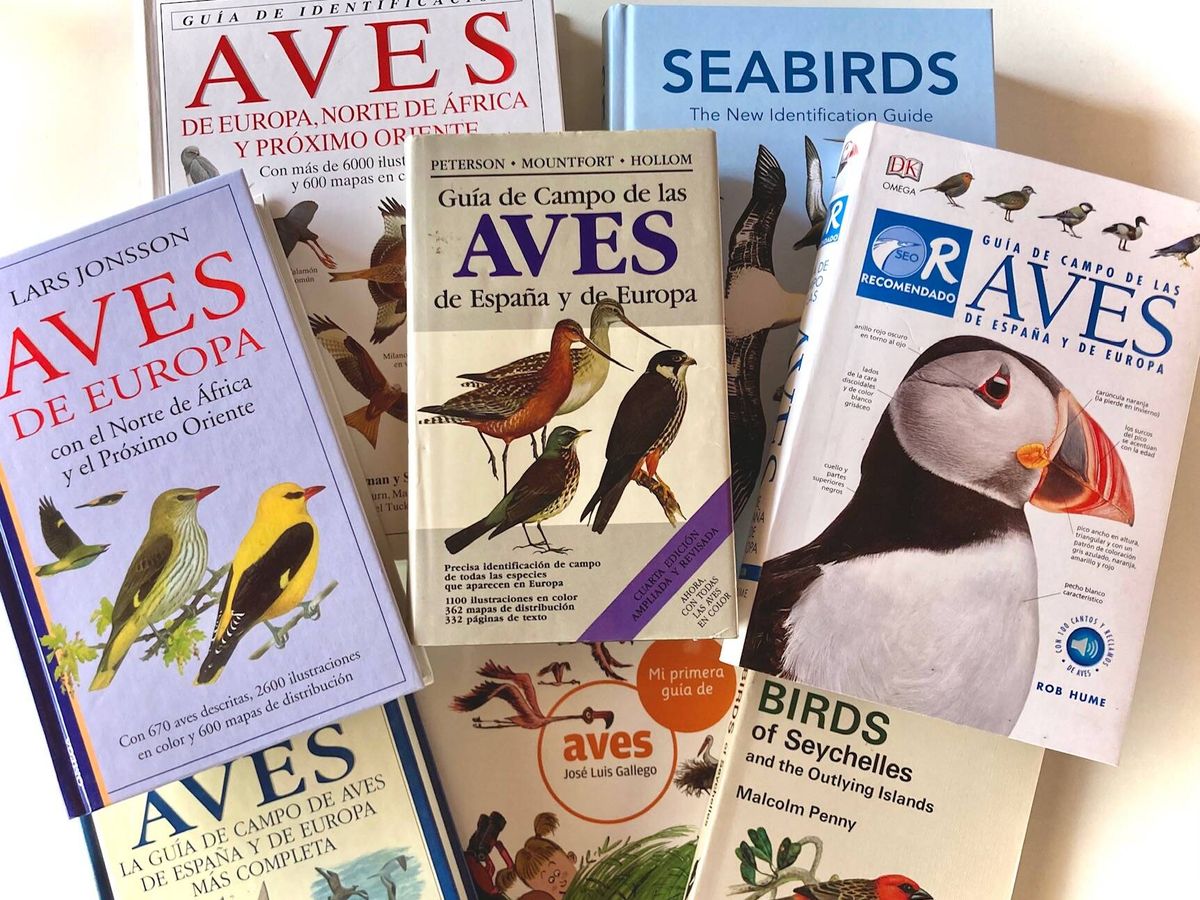
Field guides are essential for learning to identify the birds around you. There’s a wide variety of field guides available, so we’re going to give you some more specific options.
I would start with a bird guide for the country or region where you live, and make it as basic as possible. Why? Because this way, it will include fewer birds, focusing on the most common ones, which are the easiest to find. This way, you won’t be overwhelmed by a large number of names and you’ll be more direct. Every bird you see, you’ll EASILY find in your guide.
Here are some of the most common ones:
“Birds of Spain”
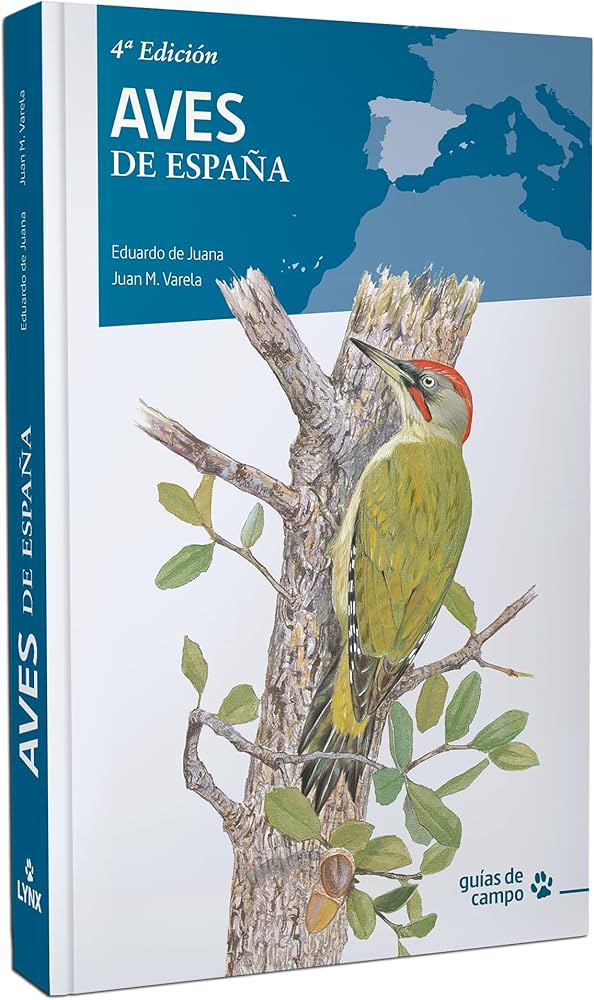
Author: Eduardo de Juana. Illustrations by Juan Varela.
Publisher: Lynx.
PRICE: €23
Recommended by SEO/BirdLife.
“La Guía más Completa de Aves de Europa y Región Mediterránea”.
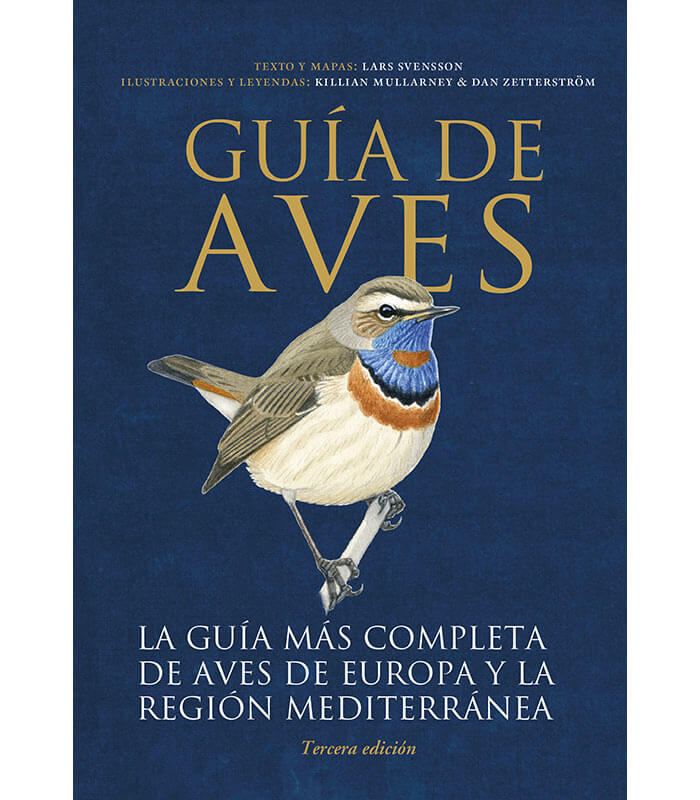
Authors: Svensson, K. Mullarney, D. Zetterström
Publisher: Collins
Edition: The 3rd edition is the latest and was published in 2022 in English and in 2023 in Spanish.
PRICE (Spanish guide): €59.
The English version is considerably cheaper.
Title: “The most complete guide to the birds of Britain and Europe”.
PRICE (English guide): €26.
“Guía de bolsillo para el Observador de Aves de España y Europa”
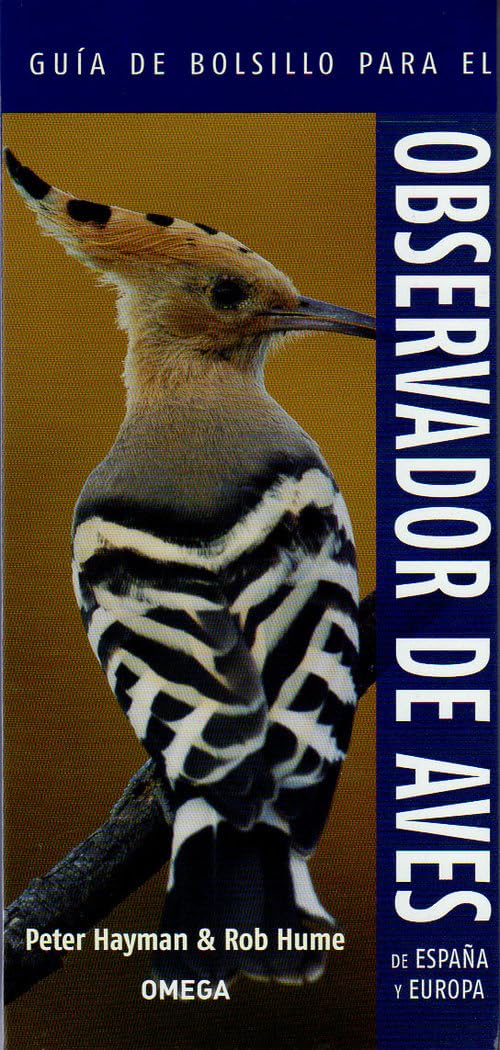
Authors: Peter Hayman, Rob Hume. Translator: José Luis Copete Peralta.
Features 430 bird species, but with less information than previous editions.
The good thing is that, being pocket-sized, it’s easily portable.
Price: €18.50
Technology associated with birds:
Today, we cannot have a complete understanding of any discipline without considering its associated technology, in this case, that related to birds.



Merlin Bird ID
An app that helps you identify birds in three different ways:
1. By bird song. It tells you what bird is singing, like Shazam for birds.
2. From a photograph. It works best if the photo was taken with a camera, even a compact one, as long as it has zoom. Photos taken with a mobile phone tend to be somewhat distant.
3. With a description: This is accessible in all situations as long as you can provide information about:
the location and date of your observation;
the relative size (compared to other birds);
the bird’s color: up to three colors;
what it was doing or where it was (on a bush, post, in the water, in flight, or on the ground, etc.);
the observed behavior also helps to narrow down the type of bird.
It also includes a bird encyclopedia.
If you tell it where you are, it will even tell you which birds are around you.
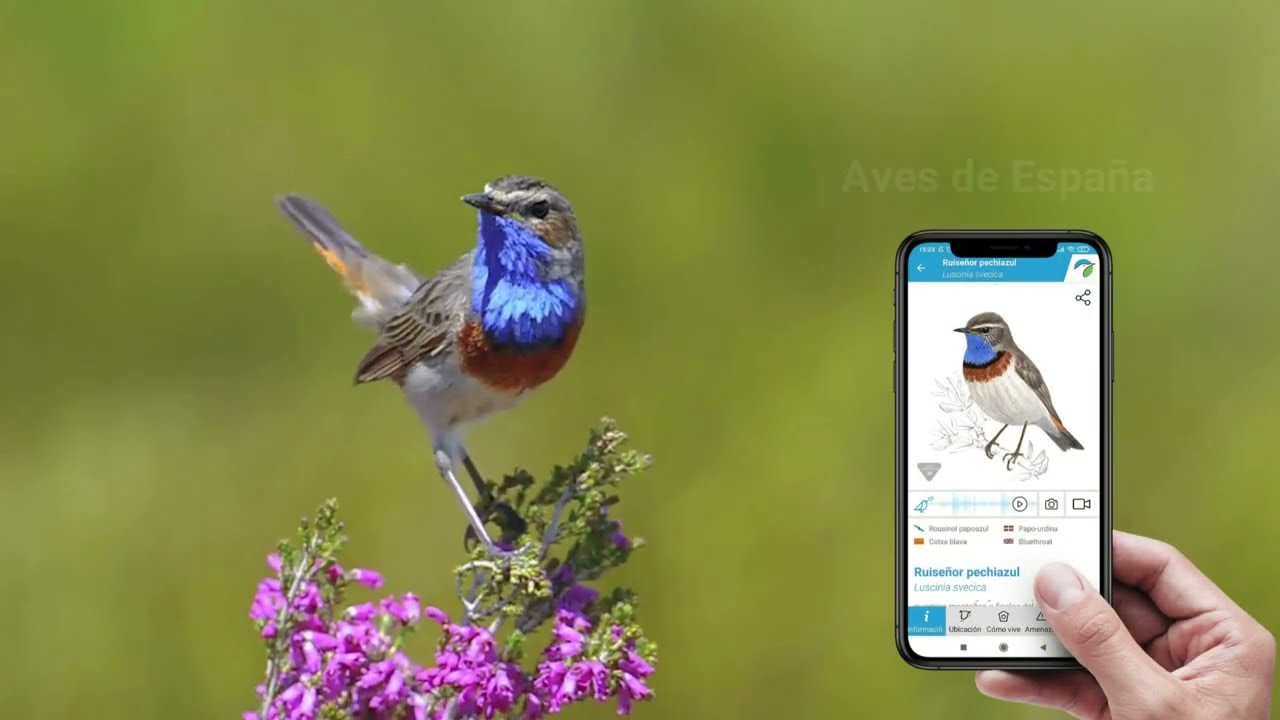
Aves de España
Realizada por Seo Birllife. Es tipo enciclopedia que en la misma pantalla haciendo skroll puedes ver todas las aves y así buscar y encontrar fácilmente la que te interesa.
En ella podrás encontrar información super detallada de cada especie que incluye: Fotos, sonidos, descripción, biología, distribución y amenazas.
Going out into the field with experienced people:
The world of birdwatching is fascinating, sparking great interest and passion among its enthusiasts. So much so that it’s quite enjoyable to share this hobby with other birdwatchers in Spain.
You might be lucky enough to have a good friend, acquaintance, relative (like a brother-in-law), or a naturalist group to go out with. This will help accelerate your progress and make each birdwatching outing more rewarding, especially at the beginning.
SEO Birdlife organizes local groups throughout Spain whose objective is to share this hobby and help with bird conservation. Look for the group closest to where you live. Check out this link: